Back to Home
Bay Area Plumbing Services

Water Line Repair
& Replacement
in Bay Area, CA

Did your water bill spike for no obvious reason? Is there a wet spot in your yard that never dries out? Is your water pressure suddenly half of what it was last week? These are signs your main water service line is leaking underground. Your water line is the buried pipe that carries pressurized water from the city main at the street to your home. When it cracks or separates at a joint, water leaks continuously into the surrounding soil 24 hours a day. Every day you wait, you're paying for water that never reaches your house.

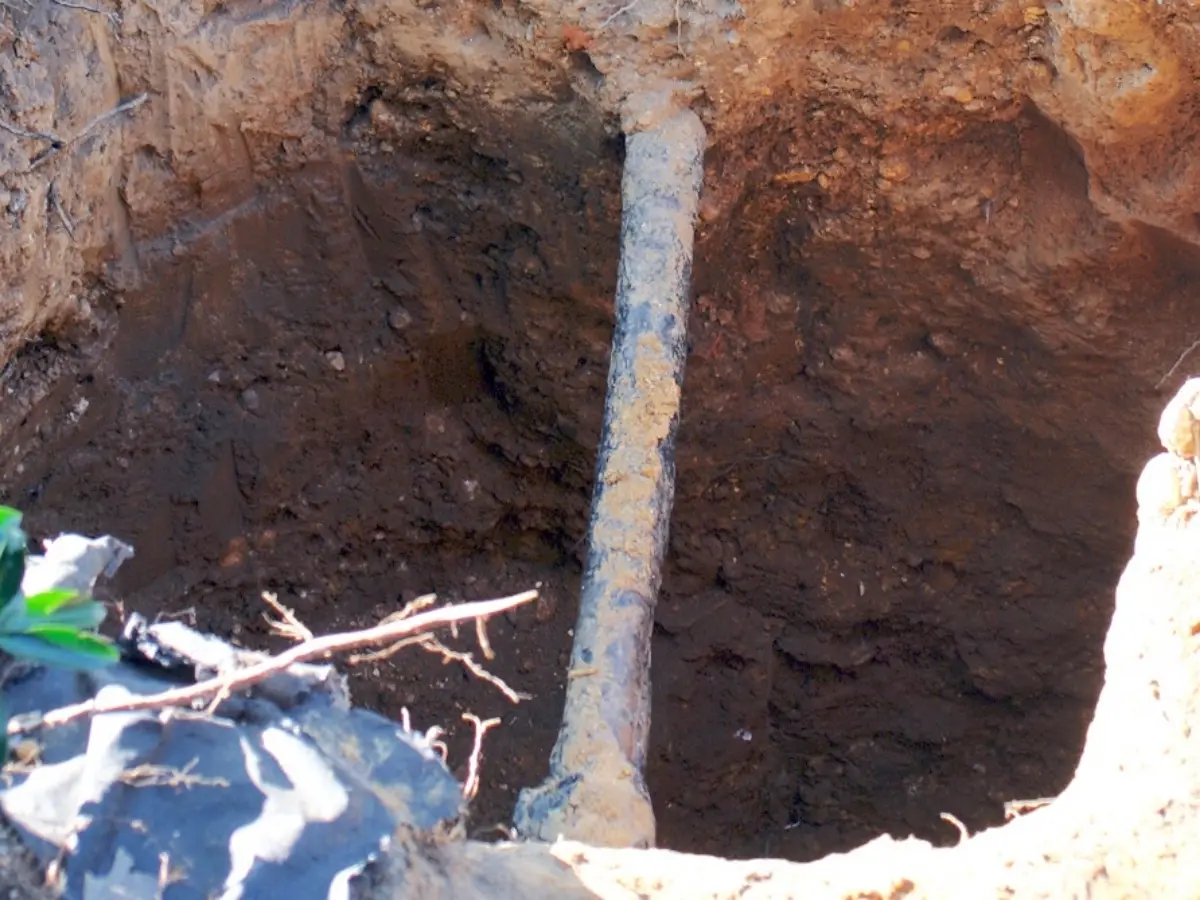
At United Plumbing and Water Heaters, we repair and replace residential water service lines using traditional excavation and trenchless methods. We serve Dublin, CA, Pleasanton, Livermore, and communities along the I-80 corridor up to Sacramento and Roseville. Our licensed plumber will locate the leak, determine whether spot repair or full replacement makes sense for your pipe's age and condition, pull the required permit, call 811 for utility marking, and complete the work with a pressure test and city inspection.
★★★★★ 4.9/5 Average | ✓ CSLB Licensed #1116823
Water Line Repair and Replacement Bay Area

Signs You Need Water Line Repair or Replacement

Your main water line is buried underground and out of sight, so most leaks go undetected for weeks or months before a homeowner notices anything. The longer a leak runs, the more damage it does to the surrounding soil, your foundation, and your water bill. If your water service line is original galvanized steel from before the 1970s, or original copper from before the 1990s, it is approaching or past its expected service life. If you notice any of the following, contact us.

Unexplained Spike in Water Bill

If your water bill jumped 30% or more without any change in household usage, an underground leak on the main line is the most likely cause. Even a small crack in a pressurized water line can waste hundreds of gallons per day. Your water district may flag unusual consumption, but many homeowners discover the spike only when the bill arrives weeks later.

Wet or Soggy Spot in the Yard

A persistently wet or muddy area in your front yard, side yard, or near the water meter when it hasn't rained is a strong indicator of a water line leak. The water follows the path of least resistance through the soil and surfaces at the lowest point. You may also notice a strip of grass that is greener or grows faster than the surrounding lawn because the leak is continuously irrigating that section.

Drop in Water Pressure

A sudden or gradual decrease in water pressure throughout the entire house points to a leak or a restriction in the main line. If the pressure drop affects every fixture, the problem is upstream of the house at the service line level. A single fixture with low pressure is a different issue. Whole-house pressure loss means the main line is either leaking or partially obstructed by corrosion or mineral buildup.

Discolored or Rusty Water

Brown or rust-colored water from every tap in the house indicates corrosion inside the main water line. This is most common in homes with original galvanized steel pipes. As the pipe corrodes internally, iron particles break loose and enter the water stream. The corrosion also narrows the pipe diameter, contributing to reduced water pressure over time.

Sound of Running Water When Nothing Is On

If you can hear water flowing through pipes when all fixtures and appliances are off, water is escaping somewhere in the system. To confirm the leak is on the main line, shut off the main valve inside the house and check the water meter. If the meter dial is still spinning, the leak is between the meter and the house on the service line.

Water Line Over 40-50 Years Old

Galvanized steel water lines corrode from the inside out and typically last 40 to 60 years. Copper lines can last 50 to 70 years but develop pinhole leaks from soil acidity and electrolysis. Polybutylene (gray plastic pipe used from the 1970s to 1990s) is prone to brittle failure and should be replaced proactively if present. If your home has original water line piping from any of these eras, a proactive inspection is recommended before a failure forces an emergency excavation.

How Our Water Line Service Works

01

Call or Book Online

Contact us by phone or through our online form. We confirm your appointment immediately and give you an arrival window. Emergency water line service available.

02

Leak Location & Diagnosis

Our licensed plumber arrives on time, tests the water meter for active flow, checks the pressure at multiple fixtures, and uses electronic leak detection or visual excavation to locate the failure point. We determine the pipe material, depth, and condition to recommend spot repair or full replacement.

03

Flat-Rate Quote & Permits

WWe give you a clear, flat-rate price before starting. No surprises, no hidden fees. Spot repairs run $800 to $2.500. Full water line replacement runs $5,000 to $12,000 depending on length and method. We pull the permit and call 811 for utility marking.

04

Repair & Pressure Test

We excavate to the pipe, complete the repair or install the new line with copper or PEX, connect to the meter and the house, backfill and compact, run a pressure test to verify zero leaks, and schedule the city inspection. Every job is backed by our warranty on parts and labor.

Why Bay Area Homeowners Choose Us?

Over 7 years and 16,000+ jobs completed across Bay Area & Sacramento.

  • CSLB License #1116823
  • Flat-rate pricing
  • Same-day emergency water line repair
  • Warranty on all parts and labor
  • Available 24/7 with no overtime charges
  • We handle permits, 811 utility marking, and inspections
  • Pressure testing on every water line job

United Plumbing Team
Water Line Pipe Materials We Install
Copper (Type K) PEX HDPE CPVC

Water Line Service Areas in Bay Area

We provide water line repair and replacement across the following cities and surrounding areas:

San Jose
Fremont
Concord
Walnut Creek
Richmond
Pleasanton
Livermore
Dublin
San Ramon
Vallejo
Napa
Fairfield
Vacaville
Sacramento
Roseville
Davis
Elk Grove

Frequently Asked Questions

Common questions about water line repair and replacement in Bay Area.

How much does water line replacement cost?
Spot repairs run $800 to $2.500. Full water line replacement runs $5,000 to $12,000 depending on length and method. We pull the permit and call 811 for utility marking. Contact United Plumbing and Water Heaters for an accurate estimate.
How long does water line replacement take?
A spot repair on a shallow accessible section takes half a day. A full water line replacement on a standard 40 to 60 foot residential service line takes 1 to 2 days using traditional excavation. Trenchless methods take 1 to 2 days as well but involve less surface disruption. Backfill, compaction, and surface restoration add time depending on what was above the pipe. Water is typically restored the same day the new pipe is connected and pressure tested.
Should I repair or replace my water line?
If the pipe is copper or PEX and the damage is limited to one isolated section, a spot repair is the most cost-effective option. If the pipe is galvanized steel, polybutylene, or any material over 50 years old with multiple weak points, full replacement is the better long-term investment. A spot repair on an aging pipe buys time, but corrosion is a progressive problem. If you repair one section today, the next section will likely fail within a few years. Our plumber will show you the pipe condition and give you an honest recommendation.
What pipe material is best for water line replacement?
Copper (Type K) is the traditional standard for underground water service lines. It lasts 50 to 70 years, resists corrosion in most soil types, and is accepted by every jurisdiction. PEX (cross-linked polyethylene) is a newer alternative that is flexible, freeze-resistant, and corrosion-proof. PEX costs less than copper and installs faster because it bends around obstacles without fittings. However, some Bay Area jurisdictions do not allow PEX for the underground section between the meter and the house. Our plumber will confirm what your local code allows and recommend the best material for your specific soil conditions.
How do I know if my water line is leaking?
The simplest test is to shut off every fixture and appliance inside the house, then check your water meter. If the meter dial or flow indicator is still moving, water is leaving the system somewhere between the meter and the house. Other signs include a wet spot in the yard that never dries, a sudden drop in water pressure throughout the house, a water bill that spiked without any change in usage, and the sound of running water when nothing is on.
Who is responsible for the water line from the street to the house?
In most Bay Area jurisdictions, the homeowner owns and is responsible for the water service line from the water meter (or the curb stop valve) to the house. The city or water district owns the main under the street and typically owns the connection from the main to the meter. If the leak is on the homeowner's side of the meter, the homeowner pays for the repair. If the leak is on the city side, the water district handles it. Our plumber can help you determine which side of the meter the problem is on.
What is trenchless water line replacement?
Trenchless replacement installs a new water line without digging a full-length trench across your yard. The two most common methods are pipe bursting (pulling a new pipe through the old one while breaking the old pipe apart) and directional boring (drilling a new path underground and pulling the new pipe through). Trenchless methods cost more per foot than traditional excavation but save thousands in surface restoration costs because they avoid destroying driveways, walkways, and mature landscaping. Not every situation qualifies for trenchless. The pipe route must be relatively straight and free of sharp bends.
Does homeowners insurance cover water line repair?
Standard homeowners insurance does not cover water line replacement caused by corrosion, age, root intrusion, or gradual wear. If the line bursts suddenly and causes interior water damage to your home, the interior damage may be covered under your standard policy, but the pipe repair and excavation costs typically are not. Some insurance companies offer an underground service line endorsement for an additional $5 to $15 per month that covers pipe repair, excavation, and surface restoration. Check your policy for this endorsement.
Do I need a permit for water line work?
Yes. Water line repair and replacement require a plumbing permit in all Bay Area jurisdictions. The permit ensures the installation is inspected for proper pipe material, trench depth, backfill compaction, and connection integrity at both ends. If the work involves connecting to the city meter or working in the public right-of-way, an encroachment permit may also be required. Our plumber handles all permit applications, 811 utility marking, and inspection scheduling as part of every water line job.
How long does a water line last?
Copper water lines last 50 to 70 years depending on soil acidity and water chemistry. PEX lines are projected to last 40 to 50 years or more, though the material has only been in widespread residential use since the 2000s. Galvanized steel lines last 40 to 60 years but corrode from the inside, restricting flow long before the pipe actually fails. Polybutylene (gray plastic pipe installed from the 1970s to 1990s) has a high failure rate and should be replaced proactively if your home still has it. HDPE (high-density polyethylene) is the most durable option for underground applications, with a projected lifespan exceeding 50 years.

Need Water Line Repair or Replacement in Bay Area?

Scroll to Top